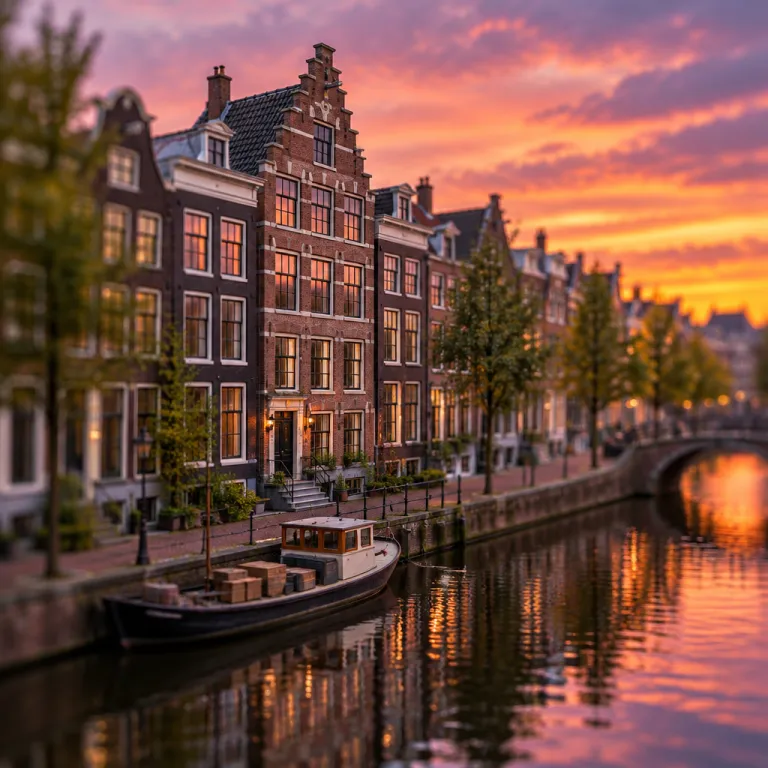
Reading the canal house: how merchants shaped the skyline
Walk along any Amsterdam canal and you are essentially walking through a merchant ledger. The classic canal house looks narrow from the street because, from the 17th century onward, city property taxes were often calculated on the width of the frontage, so traders built deep and tall instead, stacking floors like chapters in a commercial story. Many of today’s luxury hotels in Amsterdam quietly inherit this logic, turning former warehouses and canal-side residences into intimate properties where every stair and beam still reflects that trading past.
Look up and you will see hoist beams and pulleys projecting over the water, once used to lift goods from canal boats directly into the house. A thoughtfully restored canal-house hotel often keeps that hoist in place, framing canal-ring views while the interior becomes a calm great room or series of smaller rooms for guests. When you check into these specialist heritage hotels, you are stepping into a property that once stored spices, textiles or books, now reimagined as a well-located refuge in the historic canal district.
The gable tells you even more about the city and its centuries of trade. Step gables, common from the late 16th to early 17th century, tend to signal earlier waves of canal prosperity, while neck and bell gables, popular from roughly 1640 to 1780, usually point to later wealth and changing architectural taste. A thoughtful hotel that respects this heritage will preserve the façade exactly as it stands on the canal, then carve out a great location for a quiet room at the back, where the city-centre noise softens and the canal houses across the water feel like a private stage.
From counting house to hotel: sleeping inside a monument
Choosing an Amsterdam canal-house hotel in a former merchant residence means accepting that you are sleeping inside a listed monument, not a purpose-built resort. Rooms can be quirky in shape because the original house followed a narrow plot, and a great room with a canal view might sit behind centuries-old beams that no architect today would dare to remove. For many guests this is the best part of the trip, because the property feels like a lived-in house rather than an anonymous city hotel.
Expect steep stairs, slightly uneven floors and the occasional low beam in these historic hotels travellers love for character. Elevators are not always possible in every conversion, especially in the tight canal belt where protected structures limit what can be changed. When you read guest reviews, check how they describe the room layout and whether the hotel has managed to balance heritage with comfort, especially if you plan to stay more than one night or travel as a couple with large luggage.
Location is where these canal houses truly shine for culture-focused visitors. From a well-located townhouse near Dam Square, you can walk to the Royal Palace, the Anne Frank House and the Jordaan district in minutes, turning the city into your extended lobby. If you prefer a refined stay beside the Royal Palace itself, a property such as the Best Western Dam Square Hotel, reviewed as a refined choice beside Amsterdam’s Royal Palace, shows how a central square address can still echo the merchant era through its façades and proportions.
Heritage versus comfort: how canal-house hotels negotiate the trade-offs
Every conversion of a canal-side merchant house into a boutique hotel is a negotiation between authenticity and modern expectations. Hoteliers must work within strict city regulations that protect the canal ring, so they often hide contemporary systems behind original panelling or in former storage rooms. The result can be a hotel where the room feels centuries old yet the water pressure, climate control and soundproofing perform as well as any new-build property in the city centre.
Space is the main luxury in these canal houses, and not every hotel can offer it equally. Some properties create one great room per floor, ideal for a solo explorer or couple who want to feel like they have their own Amsterdam address for the night. Others divide the deep floor plan into several rooms, which increases choice but can reduce natural light, so always check availability for canal-facing categories if views over the water are a priority for your trip.
Accessibility is another trade-off that matters in this district. Steep staircases and narrow corridors are part of the original house design, and even when a hotel adds an elevator, there may still be short flights of steps between levels. For travellers who need step-free access, it is wise to read the hotel description carefully and check with the property directly, sometimes using a dedicated contact such as the one explained in this guide to a refined historic stay in Amsterdam, before you confirm the booking.
Neighbourhoods, canals and context: choosing your merchant-era base
Where you stay along the canal ring shapes how you experience the city. A canal house in the western canal district near the Anne Frank House places you close to Jordaan cafés, brown bars and independent galleries, ideal for a solo traveller who wants to walk late at night and still feel in the historic heart of Amsterdam. By contrast, a property near Dam Square and the Royal Palace offers a more formal city-centre atmosphere, with grand hotels that guests often pair with visits to the Van Gogh Museum and the Rijksmuseum.
For many culture-minded visitors, the best compromise is a well-located hotel on a quieter canal, perhaps one or two bridges away from the busiest square. Here you can check availability for rooms that face the water yet sit far enough from the main traffic routes to ensure a peaceful night. This kind of great location lets you walk to the Anne Frank House in one direction and the museum district in the other, turning every stroll along the canal into part of your cultural itinerary.
If you are unsure which district suits your style, use curated guides that map hotels to neighbourhood character. A resource such as this overview of the best areas for a refined city escape helps you read the city as a series of merchant-era stories. Once you understand how the canal houses, the canal district and the city-centre squares relate to each other, choosing the right property for your trip becomes less about chasing the single best hotel and more about finding the right house in Amsterdam for your own rhythm.
A short canal-house glossary for architecture curious guests
Learning a few architectural terms turns every walk along the canal ring into a private tour. A step gable looks like a staircase cut into the roofline and often signals an earlier century canal house, while a bell gable curves outward gracefully, reflecting later tastes and sometimes higher merchant status. Neck gables rise in a slim vertical panel above the façade, and when you read them in sequence along a street, you can almost chart the economic fortunes of Amsterdam from one property to the next.
The hoist beam is the horizontal timber that projects from the top of many canal houses, usually with a metal hook or pulley attached. Merchants used it to lift goods from the canal directly into the upper floors, avoiding the narrow staircases that still challenge guests in some hotels today. When you check into a heritage canal-house hotel, look up at the hoist and imagine bales of spices or crates of ceramics swinging past your great room window, connecting your stay to the city’s trading past.
Inside, notice how the long, thin floor plan shapes the rooms and corridors. Front rooms traditionally served as show spaces for clients, while back rooms and attics stored inventory, a pattern some hotels still echo by placing lounges or breakfast areas at the front and quieter rooms toward the rear. Once you start to read these clues, every Amsterdam façade, every canal-district corner and every well-located square near the Royal Palace or the Anne Frank House becomes part of a legible story about how merchants built the heart of the city that travellers enjoy today.
FAQ
What makes an Amsterdam canal-house hotel different from a regular city hotel ?
An Amsterdam canal-house hotel differs from a regular city hotel because it occupies a historic merchant property with a narrow frontage, deep floor plan and original architectural features. Rooms often follow the existing structure, so you may find steep stairs, exposed beams and irregular layouts instead of standardised corridors. This creates more character but also means you should check availability for specific room types if you need extra space or accessibility.
Is a canal-ring location practical for a first trip to Amsterdam ?
Staying on the canal ring is very practical for a first trip because you are close to major sights while still feeling part of a residential district. From many canal houses you can walk to Dam Square, the Royal Palace, the Anne Frank House and the Van Gogh Museum within about 20 to 30 minutes. A well-located property in the city-centre canal district also makes it easy to return to your room during the day, which is useful if you plan long museum visits or late-night dinners.
Are canal-house hotels suitable for solo travellers ?
Canal-house hotels suit solo travellers particularly well, especially those interested in architecture and history. Smaller rooms in these historic hotels are often priced more attractively than large suites, yet still offer a great location and strong sense of place. If you travel alone, look for a property on a lively but not noisy canal, where cafés and shops stay open into the evening so the streets feel active when you return at night.
How should I choose between different canal districts for my stay ?
Choosing between canal districts depends on whether you prioritise museums, nightlife or quiet streets. Areas near Dam Square and the Royal Palace place you in the busiest part of the city centre, while western canals near the Anne Frank House and Jordaan feel more residential and intimate. For easy access to the Van Gogh Museum and other institutions, the southern canal ring near the museum quarter offers a balanced mix of culture, dining and calm.
What are the main trade-offs of staying in a historic canal house ?
The main trade-offs are space, accessibility and layout compared with a modern hotel. Rooms may be smaller or shaped by original walls, and some properties cannot install full elevators because of protected structures. In return, you gain a unique sense of history, a great room with canal views if you book early, and the experience of living inside the same kind of house Amsterdam merchants once used for both business and family life.